
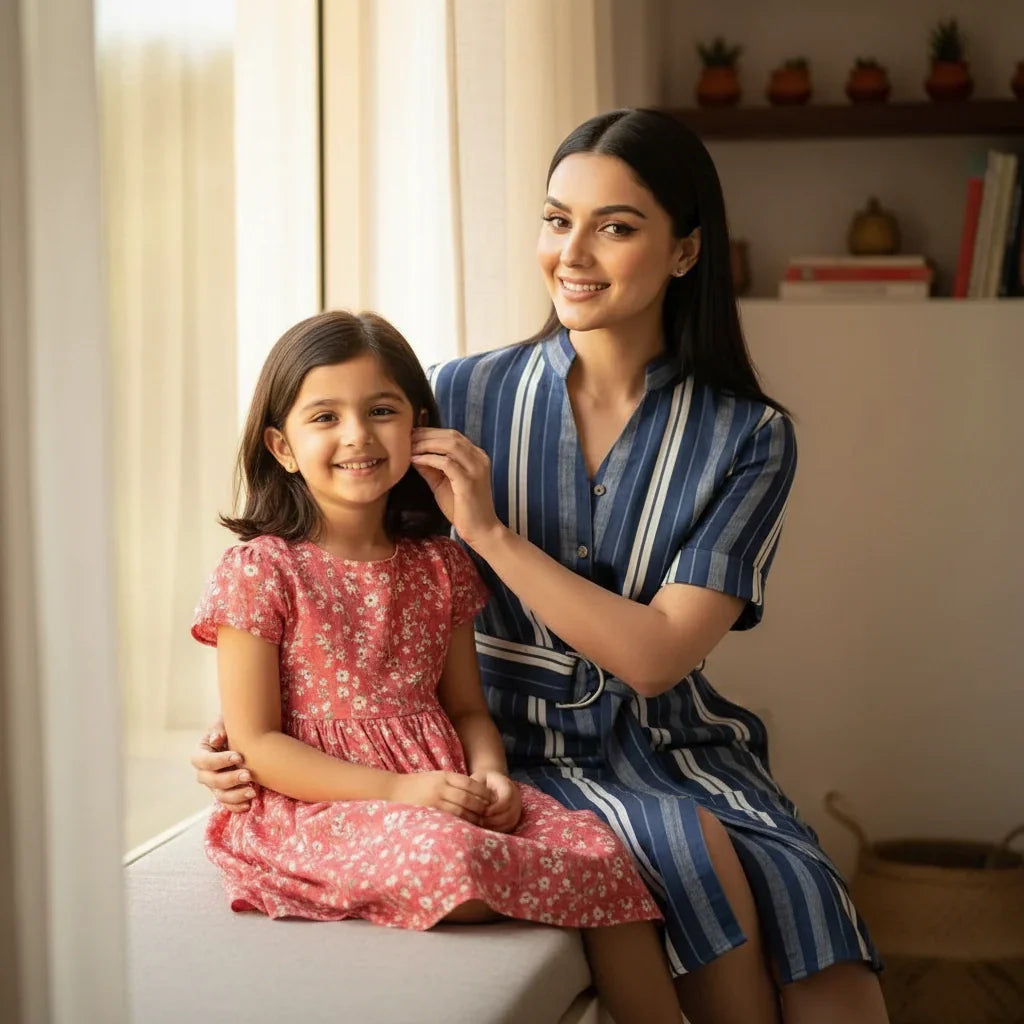
Why More Indian Mothers Are Choosing Sustainable Clothing for Women & Kids
Sustainable Clothing for Women and Kids: Why Indian Mothers Are Making the Switch
A Guide to Choosing Natural, Breathable Fabrics for Your Family's Health and Comfort
Let me tell you something I realised last summer.
I was folding my daughter's clothes—those bright little dresses we'd picked up on sale—and I noticed her scratching again. The same spot on her shoulder, red and irritated. I'd attributed it to the heat, to her sensitive skin, to everything except the one thing that spent twelve hours a day pressed against her body.
Her clothes.
That's when it hit me: we read labels on organic food. We choose chemical-free skincare. But sustainable clothing for kids? We barely think twice.

Understanding Sustainable Fashion: What Indian Parents Need to Know
Here's what the fashion industry doesn't advertise: your skin is your largest organ, and it's absorbent. Really absorbent. Especially in children, whose skin is nearly 40% thinner than ours.
Sustainable clothing for women and kids isn't just an environmental choice—it's a health decision. Those "easy care" synthetic fabrics? They're essentially plastic. Petroleum-based materials designed for convenience, not for spending sixteen hours wrapped around a sweating, moving body in India's tropical climate.
I learned this the hard way—through unexplained rashes, through sticky Mumbai afternoons where nothing felt comfortable, through watching my child pull at her collar because something just felt wrong.
The Hidden Cost of Synthetic Fabrics in Indian Weather
In India's relentless heat and humidity, wearing synthetic fabric isn't just uncomfortable—it's borderline hostile to your skin. The sweat that can't evaporate. The bacterial growth in warm, trapped moisture. The constant low-level irritation we've learned to ignore.
Common issues with synthetic clothing in Indian climate:
- Excessive sweating and body odour by midday
- Heat rashes and skin irritation, especially during summer months
- Fungal infections from trapped moisture
- Discomfort that affects productivity and mood
And for kids? It's exponentially worse. They're running, climbing, sweating through every activity in school uniforms and play wear. They can't articulate why they're uncomfortable. They just are.

Why Educated Indian Mothers Are Choosing Sustainable Kids Clothing
I started reading labels differently. Not for brand names, but for fabric content: cotton, linen, natural fibres that humans have worn for thousands years.
The difference was immediate. My daughter stopped scratching. I stopped feeling sticky by noon. Our sustainable cotton clothing actually felt like a second skin—in a good way, the way they're supposed to.
Benefits of natural fabrics for Indian families:
- Superior breathability in hot, humid weather
- Better moisture absorption and sweat management
- Reduced skin allergies and irritation
- Longer-lasting quality that justifies the investment
- Safer for children's sensitive, developing skin
This isn't about being perfect or spending extravagantly. For educated, conscious parents in metro cities like Mumbai, Delhi, Bangalore, and Pune, it's about making informed choices that protect family health.
Sustainable Fashion for Women: Investment Over Fast Fashion
That ₹299 dress seems like a win until you're washing it every other day because polyester holds odour. Until it loses shape after three washes. Until you develop that familiar rash you can't explain.
The real cost of cheap synthetic clothing:
- Frequent replacement (3-4 times per year vs. once every 2-3 years)
- Higher washing frequency, increasing water and energy bills
- Skin treatments for rashes and allergies
- Environmental guilt that many educated consumers now feel
For Indian women juggling careers and family, sustainable women's clothing made from natural fabrics offers practical benefits: fewer wardrobe changes, better comfort during long commutes, professional appearance that lasts all day, and peace of mind about what's touching your skin.
Natural Fabrics: The Smart Choice for Indian Climate
The first time you wear proper organic cotton or pure linen after years of synthetic blends, it's revelatory.
Why natural fabrics work better in India:
- Cotton naturally wicks moisture away from skin
- Linen has natural cooling properties, perfect for summer
- Both fabrics become softer with each wash
- Natural temperature regulation reduces air conditioning dependence
- Hypoallergenic properties protect sensitive skin
This is what our grandmothers knew instinctively—they wore cotton sarees and khadi kurtas not just for tradition, but because these fabrics actually work with India's climate.

Sustainable Kids Clothing: What to Look For
When choosing sustainable clothing for children in India, prioritize:
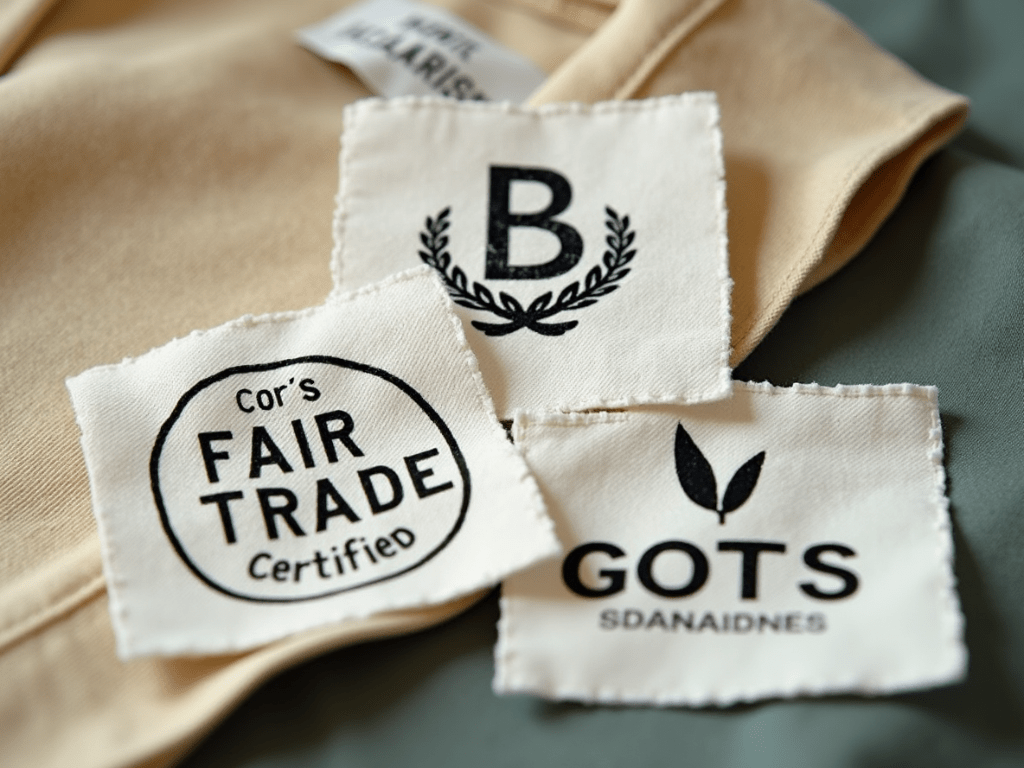
Fabric quality: Look for 100% cotton, organic cotton, or linen rather than poly-cotton blends. Check for GOTS (Global Organic Textile Standard) or OEKO-TEX certifications.
Breathability: Essential for school uniforms worn 6-8 hours daily and playwear for afternoon activities.
Non-toxic dyes: Many children's rashes come from azo dyes and chemical treatments, not the fabric itself.
Durability: Quality sustainable kids clothing withstands rough play and frequent washing, often lasting long enough to pass down to younger siblings.
Making the Transition: A Practical Guide for Indian Families
Start with high-contact items: underwear, sleepwear, and everyday basics for both you and your children. These are worn longest against skin and have the most impact on comfort and health.
Strategic shopping approach:
- Replace synthetic innerwear with organic cotton alternatives
- Choose sustainable cotton or linen for summer clothing
- Invest in quality basics that can be mixed and matched
- For kids, prioritize school uniforms and everyday wear over occasional outfits
Yes, sustainable clothing costs more upfront. But for middle-class and upper-middle-class Indian families, the math actually works: ₹1,500 for an organic cotton dress that lasts two years costs less than ₹299 dresses replaced four times annually.
Why This Matters for Indian Children's Health
India's rising rates of childhood allergies and skin conditions correlate with increased synthetic clothing use. Pediatric dermatologists across Mumbai, Delhi, and Bangalore report seeing more children with contact dermatitis and heat rashes—conditions often improved simply by switching to natural fabrics.
Your child's developing immune system doesn't need the added burden of synthetic fibers and chemical residues. In India's hot climate, breathable sustainable kids clothing isn't a luxury—it's preventive healthcare.

The Conscious Choice: Sustainable Fashion in India
I'm not here to shame anyone's wardrobe. We've all bought fast fashion. We've all grabbed the cheap option because it was there and seemed good enough.
But once you know better, you can choose better.
For educated Indian mothers who research schools, nutrition, and enrichment activities, extending that same diligence to clothing choices makes perfect sense. Sustainable clothing for women and kids isn't about perfection—it's about consciousness.
Notice how you feel in natural versus synthetic fabrics. Pay attention to what your child's skin is telling you. Track how often you need to replace items. The evidence builds quickly.
Building a Sustainable Wardrobe for Your Indian Family
Because clothing isn't just what you wear. It's what you live in—through humid monsoons, scorching summers, and air-conditioned office spaces.
You—and your child—deserve to be comfortable in your own skin.
And in India's challenging climate, sustainable clothing made from natural fabrics isn't just an ethical choice. It's the practical one.
Looking for sustainable clothing brands in India? In our next article, we'll review the best sustainable fashion brands for women and kids clothing available in India, comparing quality, price points, and where to shop both online and in metro cities.
Have questions about making the switch to sustainable fashion? Share your concerns in the comments—we're building a community of conscious Indian parents making better choices together.

Written by Karee Clothing

Leave a comment
This site is protected by hCaptcha and the hCaptcha Privacy Policy and Terms of Service apply.